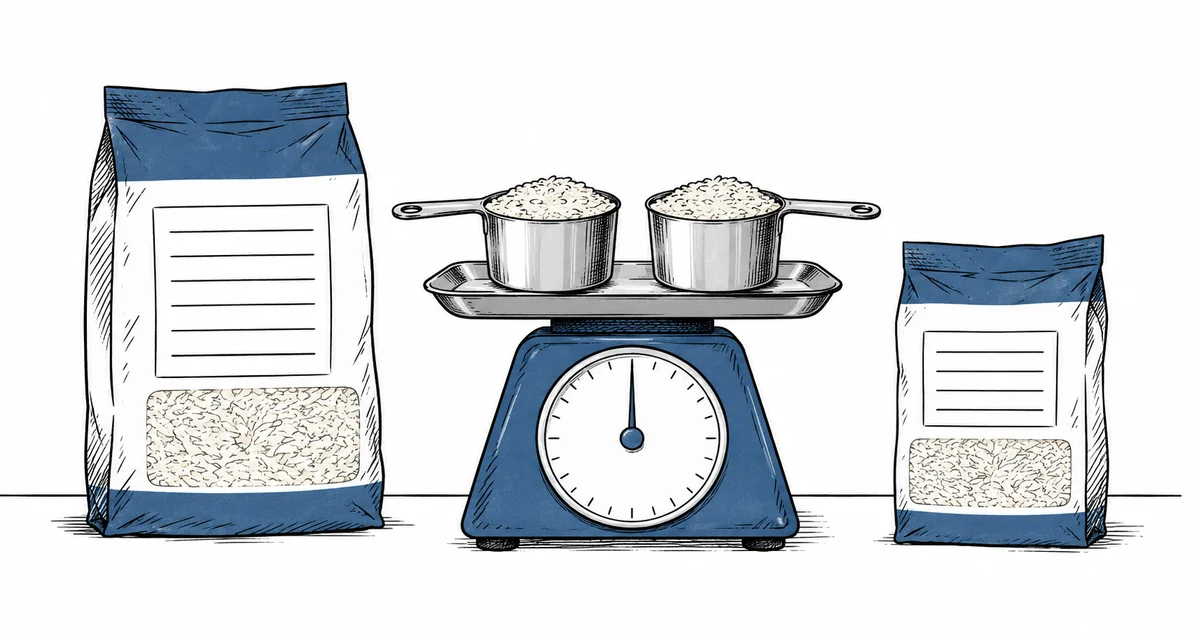
A bag of dal and a tub of pea protein can both say something about plants and protein. They are different foods used in different ways. Compare the portion you plan to eat before choosing between them.
Do not compare a scoop with a dry bag
First identify the basis of each nutrition panel. Dry lentils, cooked dal and a powder prepared with milk or water are not interchangeable measurements. Check the preparation instructions.
Use a small comparison note: amount of food, how it is prepared and protein in that amount. Leave a blank where the label does not provide enough information. Do not borrow a number from a neighbouring flavour.
Sources: FSSAI: Labelling and Display Regulations compendium, April 2025
Read what comes with the protein
An unflavoured protein ingredient, a sweetened shake mixture and a seasoned pulse snack can have very different recipes. Read the complete list, including sweeteners, flavours and compound ingredients.
A high protein number answers one question. It does not describe the complete meal, its allergens or whether you enjoy it enough to use it. Keep those questions separate.
Sources: FSSAI: Labelling and Display Regulations compendium, April 2025
Calculate the cost of your actual portion
Here is a fictional example, not a price claim. A ₹600 tub containing 20 servings costs ₹30 per labelled serving. If you use one and a half servings, your portion costs ₹45.
For dal, record the dry amount used for the whole pot and divide its cost by the portions you actually serve. Include the rest of the recipe if you are comparing complete meals. This avoids comparing a powder ingredient with an entire lunch.
Research announcements do not choose a brand for you
The October India-Canada roundtable discussed pulse ingredient processing and texture. It did not test every retail powder or establish that a supplement is necessary.
WHO’s healthy-diet guidance includes pulses within a varied diet. That does not make a particular branded product suitable for every person. Individual requirements and medical restrictions need individual advice.
Sources: PIB: NIFTEM-K pulse protein roundtable, 13 October 2026 · WHO: healthy diet
Keep the practical reasons in the decision
Convenience, taste, cooking access and budget can all matter. A label comparison can help you see the trade-offs without pretending one format solves every need.
Save the exact product and current label when comparing powders. For a home-cooked dish, save the recipe and portion estimate. Those are different evidence sources, and they should stay labelled that way.
- Prepared portion
- Protein in that portion
- Full ingredients and allergens
- Cost per actual portion
- How the food fits the rest of your meal
Sources and further reading
This is general editorial information. Read the disclaimer and editorial policy. Send source corrections through our contact page.