You turn over a packet and find an ingredient you have never used at home. That is a reason to look it up, but it is not enough to decide whether the food fits your needs.
Start with the question you want answered
Are you comparing salt in two soups? Looking for milk because of an allergy? Checking what sweetens a drink? Write down that question first. Each needs different evidence.
A processing category and a nutrition comparison answer different questions. Do not let one replace the other. The recent meal experiment is useful precisely because it tested a question the calorie number alone could not settle.
Sources: Nature Metabolism study: PubMed record, 5 October 2026

Read the whole recipe, not the hero ingredient
“With mushrooms” describes one part of a soup. Read the remaining vegetables, fats, salt, flavourings and compound ingredients. If a seasoning mixture is named without its components, record that gap rather than filling it from a similar product.
Save the exact flavour and pack size with the label photo. A plain version and a flavoured version can share a brand name while having different declarations.
Sources: FSSAI: Labelling and Display Regulations compendium, April 2025
Keep preparation in the comparison
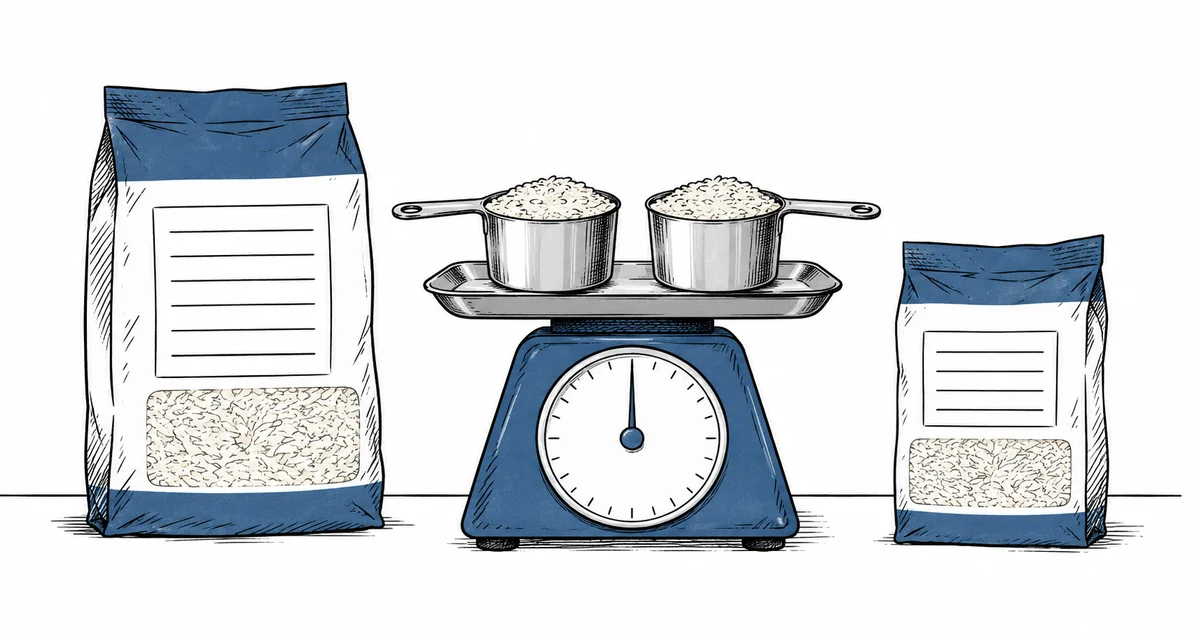
A dry soup panel and a ready-to-drink soup panel may use different bases. First check whether the numbers refer to powder, prepared soup or a stated serving.
Example: a fictional 40 g dry sachet makes two bowls. Its per-100 g dry number does not describe 100 g of the finished soup. Use the preparation instructions and the amount you actually make.
Sources: FSSAI: Labelling and Display Regulations compendium, April 2025
Do not turn uncertainty into a score
A complete declaration helps identify named ingredients. It does not reveal every processing step or independently verify the contents. At Heal.Abhi, unsupported categories and incomplete declarations remain unrated.
If the evidence is missing, a useful note is “the full seasoning recipe is not disclosed.” An invented certainty about an ingredient or a processing class helps nobody compare the product.
A practical note to save with the packet
Keep five things together: the exact product name, ingredient photograph, nutrition basis, preparation instructions and date checked. This makes a later recipe change easier to spot.
Choose one comparison you can explain clearly. For example: “These are both prepared soups, and this one lists less sodium per 100 ml.” That is more informative than a broad “clean” or “bad” label.
- Exact flavour and size
- Full recipe, including compounds where disclosed
- Dry, prepared or ready-to-eat basis
- Your usual portion
- Missing information, stated plainly
Sources and further reading
This is general editorial information. Read the disclaimer and editorial policy. Send source corrections through our contact page.